Finishing a cast shell by hand
The pour lasts twelve minutes; everything the photographs in this piece show happens in the weeks after it. Filler in the joint, primer on the shell, and then the last operation, which is done by hand, outdoors, with polishing paste.
- Words
- Gigi
- Photographs
- SYN
- Reading time
- 10 minutes
In short
- Between the mould and the crate a cast shell passes through three finishing stages: the joint is filled and primed, the surface is finished, and the finish is taken down by hand.
- The joint between a cast shell and its solid top is filled rather than found — the two do not meet perfectly, so the gap is filled, sanded flat and primed before any finish goes near it.
- The last operation on a finish is done by hand and outdoors, with polishing paste, water and a cloth, and the piece lying flat on a pallet.
- A gloss or a mirror finish keeps a record of every mark the surface was given on the way here, so the last operation is also the last chance to find them.
- The pour all of this follows is twelve minutes at 24°C, and roughly one shell in fourteen is rejected and cut up as filler.
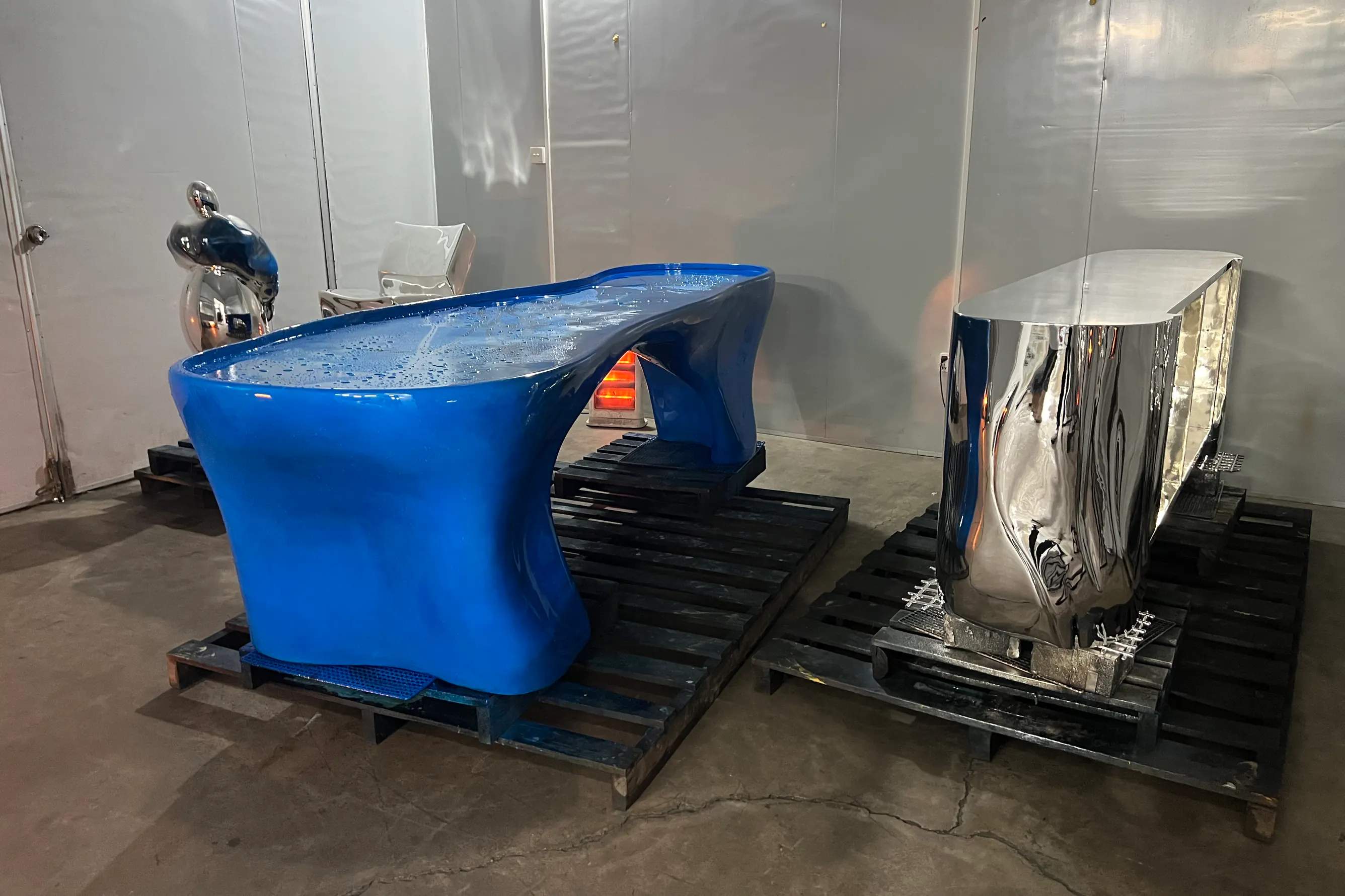
Two pieces on the pallets they were worked on, still wet from the final wash — one blue, one mirror-finished.
Photograph — SYN
A cast shell leaves the mould in one piece, in twelve minutes, and that is the part everyone asks about. The photographs in this piece are of what happens afterwards: the joint between the shell and its top, the finish, and the last stage, which is spent on the surface rather than on the shape. The pour decides what a piece can become; the finishing decides what it looks like, and it is much the longer half.
What does the pour decide?
We cast in one pour. Not because it is faster, and not because it is cheaper: it is slower and it wastes more material than casting in sections and bonding them. We do it because a bonded joint is a line you can see, and because a shell made in one sitting behaves as one piece when the temperature moves. A shell with no joints in it also gives the finish fewer places to go wrong.
Twelve minutes at twenty-four degrees. The resin has a working time of twelve minutes at 24°C, and that number is not a guideline — it is the point at which the mixture stops flowing into corners and starts holding the shape you gave it. Twenty-four degrees is the workshop floor in spring and autumn. In August we cast at six in the morning, and in January we cast after lunch, when the heaters have had four hours to do their work.
You get one pass. You cannot go back and fix a corner — you can only decide, in the first four minutes, whether this one is going to be a piece or a lesson.
Two people work the shell: one pours along the length of the mould, one works the resin into the corners with a roller and keeps the gel coat from being pushed ahead of the flow. The third reads the clock out loud. That sounds theatrical until you have watched someone lose track of a minute and pour a shell that looked perfect and failed inspection three days later at the corner nobody had reached.
- No colour matching after the fact. The pigment goes in with the resin, once. Two shells from the same batch are close, never identical.
- No thickening a wall that came out thin. Wall thickness is decided by the mould, and the mould is decided weeks earlier.
- No salvage. A shell that fails inspection is cut up and goes back as filler, at roughly the cost of the material plus the day.
- One piece per pour. The mould is occupied for the whole day, so a small order and a large one cost us the same in mould time.
What happens to the joint?
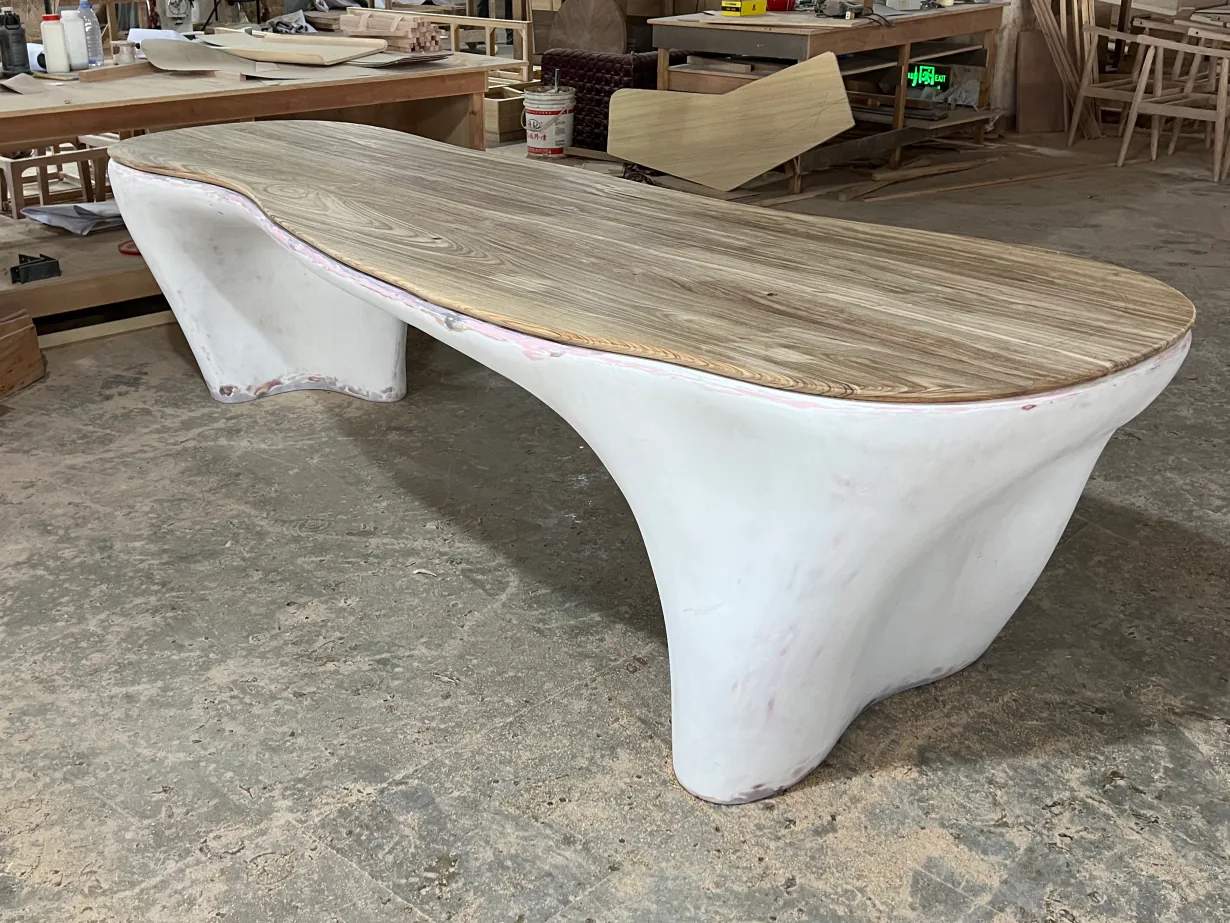
The joint between a cast shell and its top is filled, not found. A moulded shell and a solid top do not meet perfectly and are not supposed to: the gap is filled, sanded flat and primed before any finish goes near it, so that what is left reads as a line rather than a seam. The pink line in the photograph below is filler waiting to be covered.
How is the finish taken down?
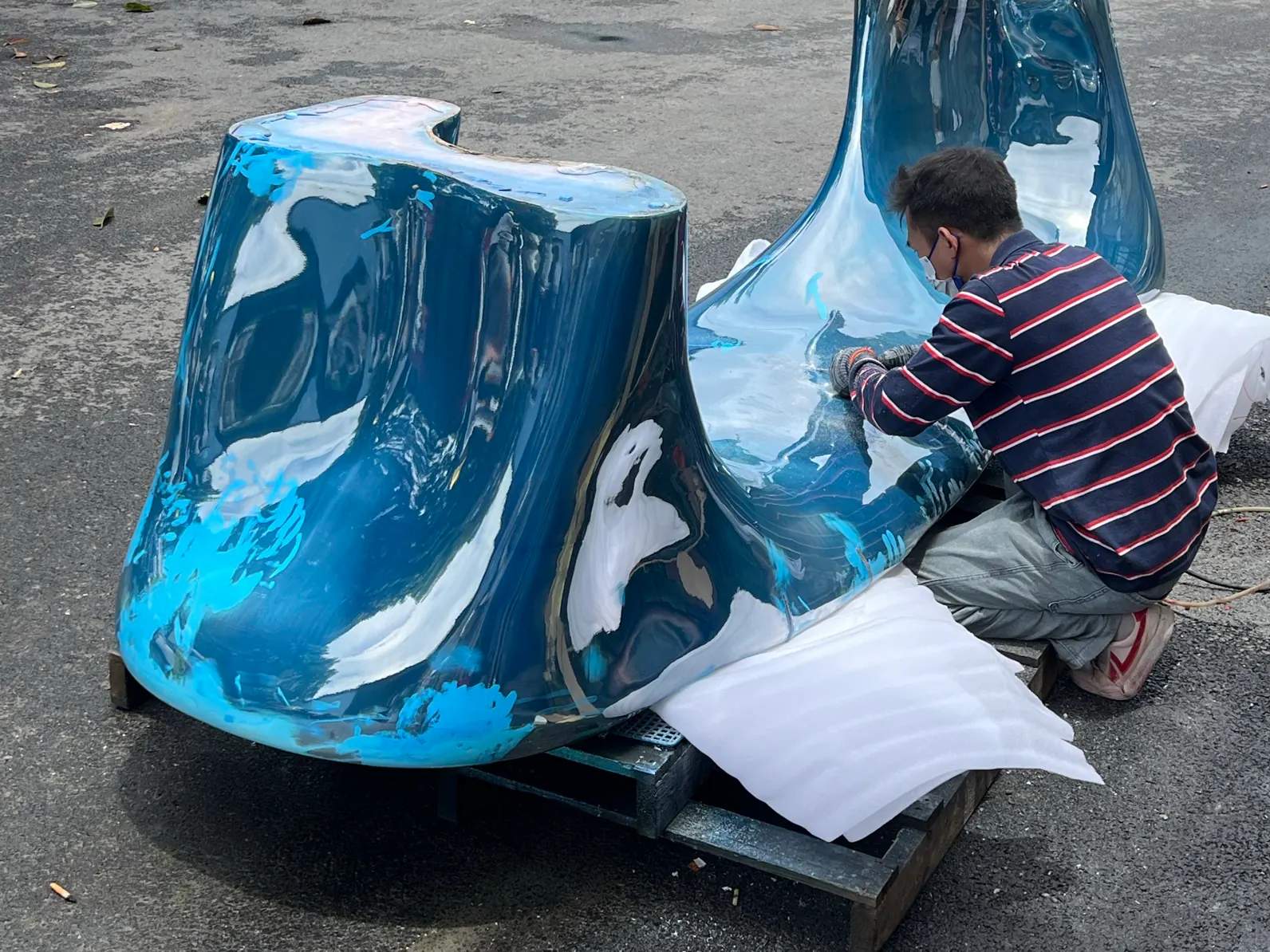
The finish goes on inside a booth lined with plastic sheeting, behind the two pieces in the photograph at the top of this page. The last operation on it is done by hand and outdoors: polishing paste, water and a cloth, with the piece lying flat on a pallet. It is the one stage that cannot be done in a booth — it needs water and room to walk around the piece — and it is the stage that gets redone when something went wrong three weeks earlier, because a gloss or a mirror keeps a record of every mark the surface was given on the way here.
What is left before the crate?
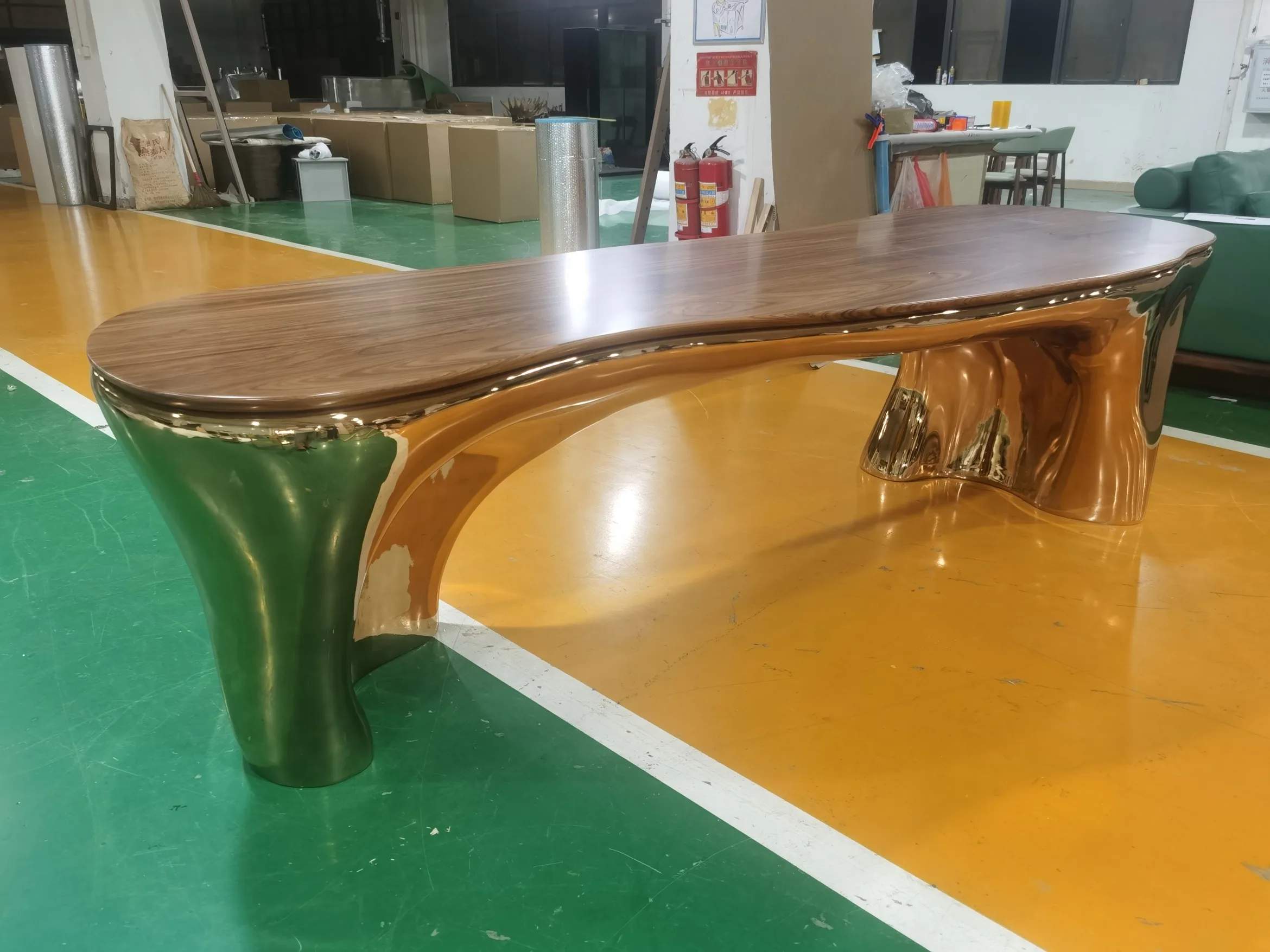
Looking at it. The third photograph is a finished piece standing in the workshop with the boxes it will be packed into: dark timber top, green base, gold along the edge where the light catches it. A shell that came out of the mould in one piece has bought nothing yet — it is worth the twelve minutes only if the weeks after them go right, and the last of those weeks is spent finding faults rather than making anything.
The shell cast on that Tuesday morning in March was signed off on the Friday and left the workshop nine weeks later. If you are reading this because you ordered a piece, that is where yours sits in the story: eight to fourteen weeks in the workshop after the pour, and the pour itself is twelve minutes of it.