From your drawing to your room
Between a drawing and a piece of furniture there are three stages no catalogue photograph shows: the drawing marked onto the surface by hand, the metal set into it, and the parts assembled into one.
- Words
- Gigi
- Photographs
- SYN
- Reading time
- 4 minutes
In short
- The three photographs in this piece are one object at three stages: the drawing marked onto the surface, the metal set into it, and the panels assembled into one.
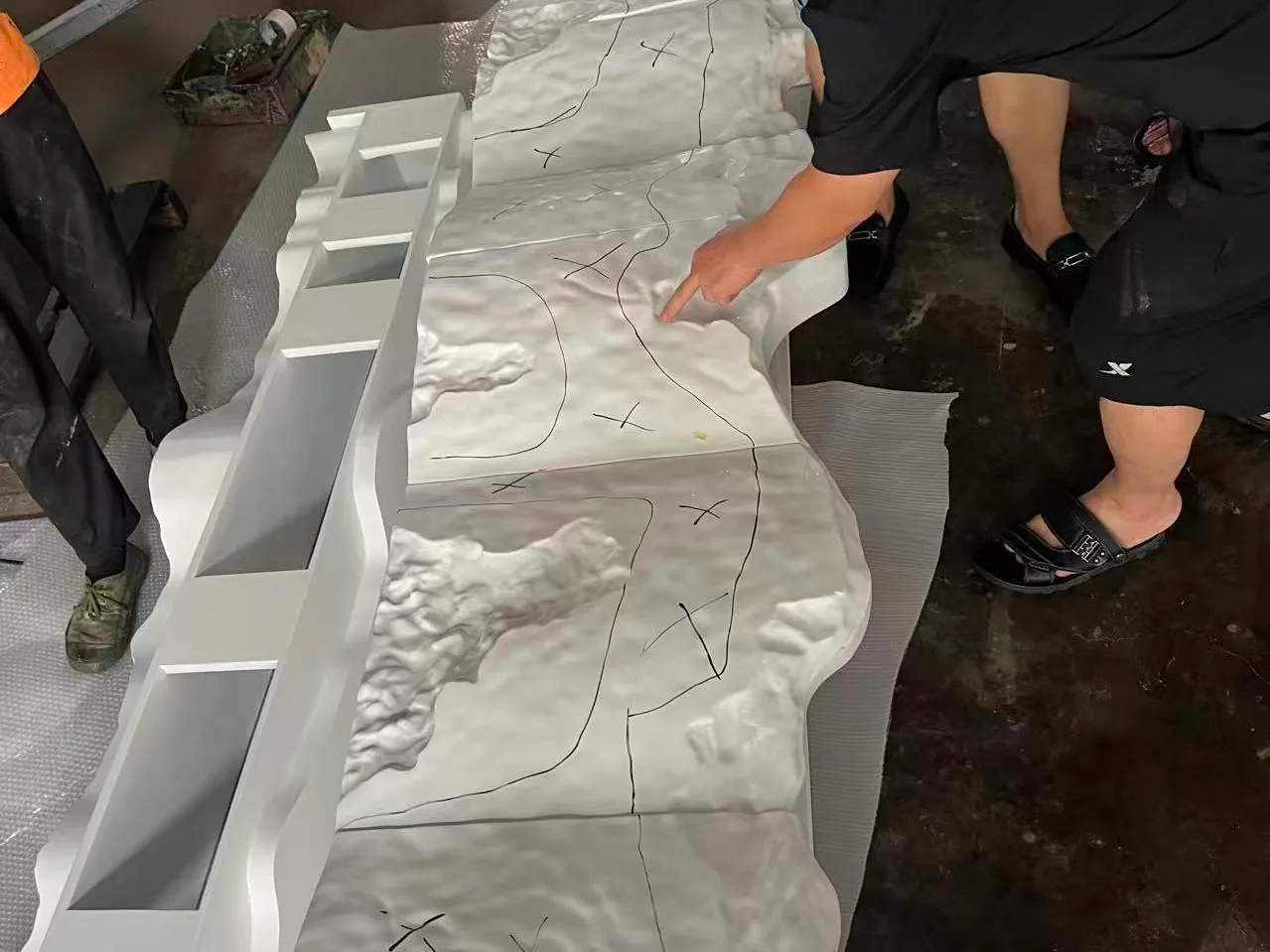
- Position is drawn, not measured: the curves and crosses that decide where the metal goes are marked in pencil straight onto the surface.
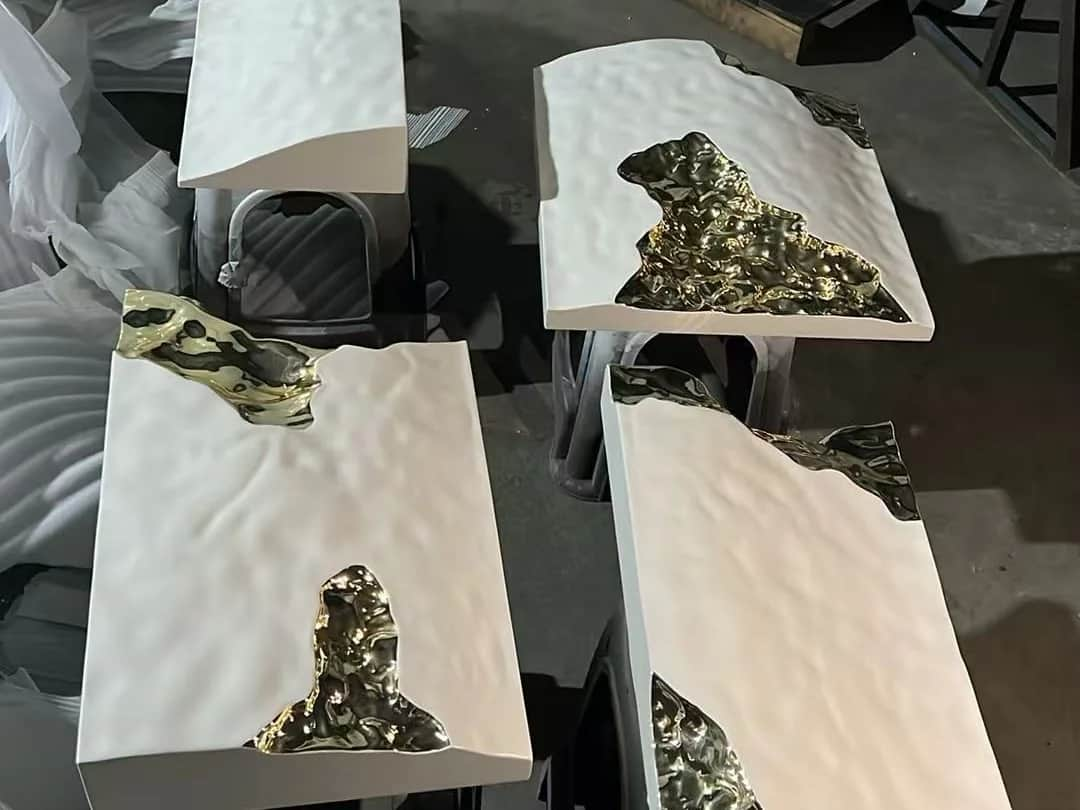
- The metal is set in panel by panel. On the four panels of this piece, no two patches are the same shape or in the same place.
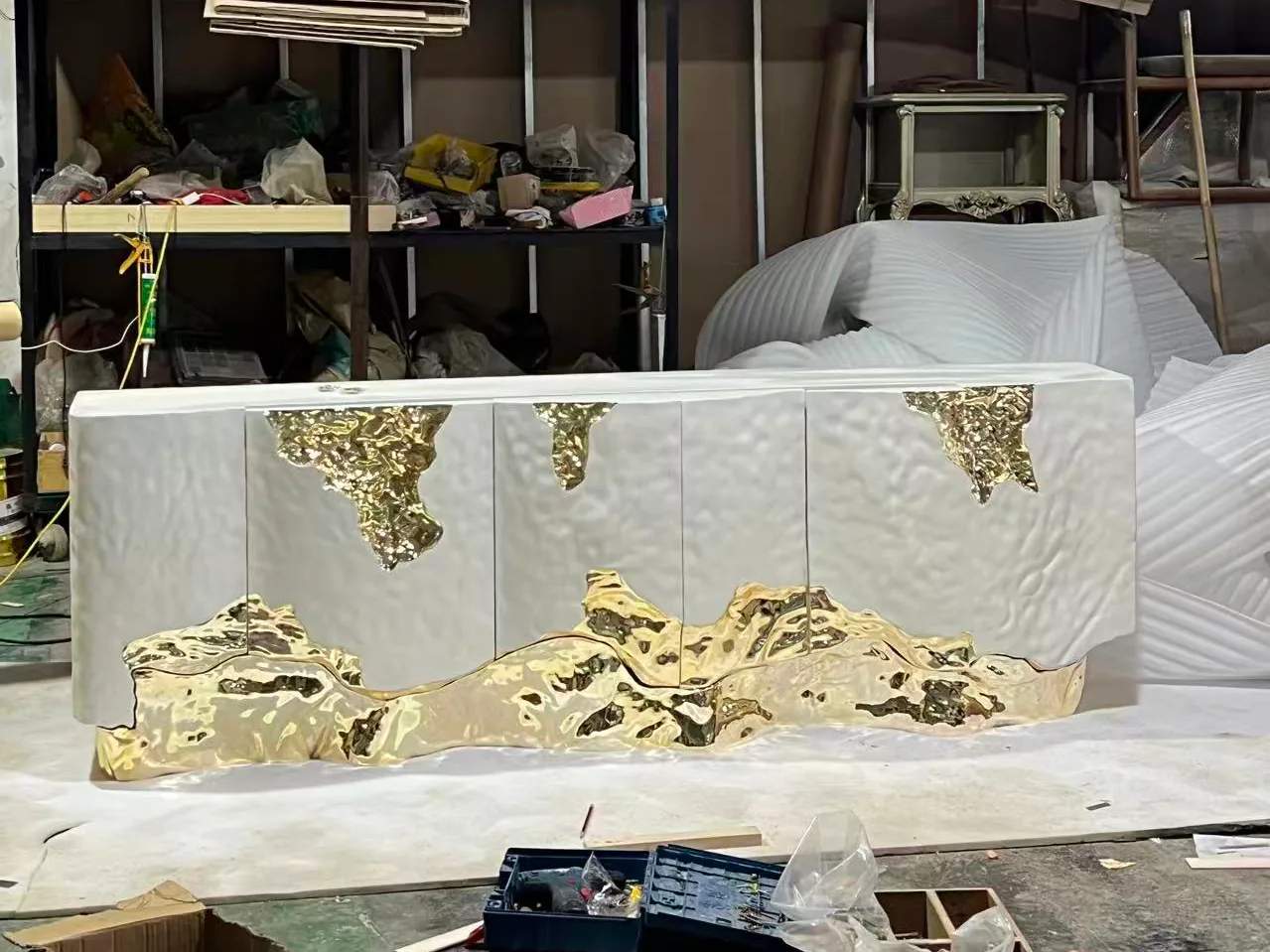
- The panels are worked separately and brought together last; the job of that stage is to make four panels read as one line.
- Sanding and waiting sit between these three stages — the slow part, and the part that does not photograph.
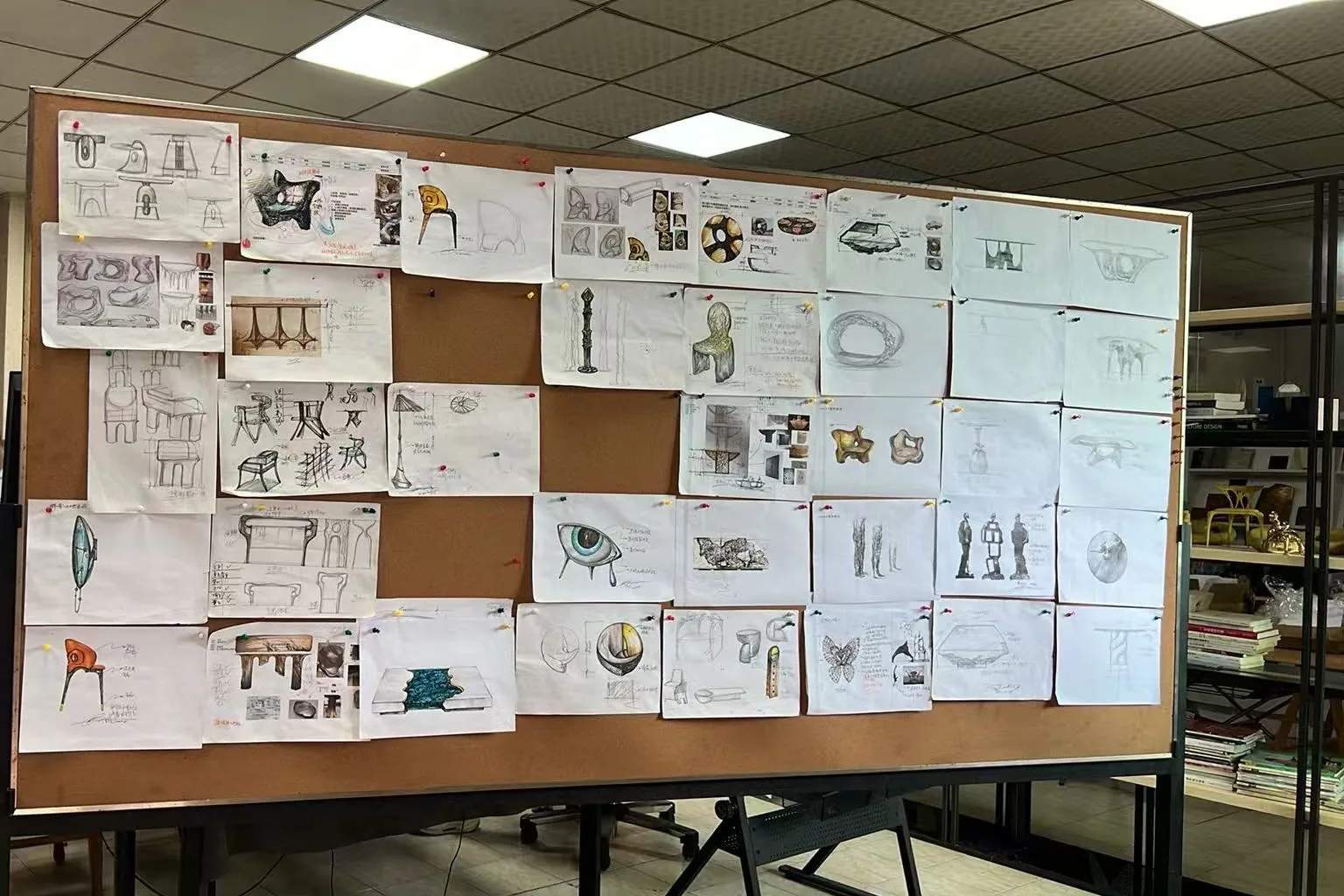
The wall the drawings go up on: sheets pinned in rows, a dozen views of the same piece to a page.
Photograph — SYN
Most pieces start as a picture: a drawing with dimensions, a photograph of the room with a tape measure lying in it, or a line under something in another catalogue. What happens next is mostly invisible — but three of the stages are not, and the three photographs here were taken on the bench at exactly those: the drawing marked onto the surface, the metal set into it, and the parts assembled.
How does a drawing get onto the piece?
In pencil, by hand, straight onto the surface. The first photograph is a white form with curves and crosses drawn across it; those marks are where the metal will go, and they are set out against the surface itself rather than against a dimension on paper. To the left of the frame, a second form of the same kind is still open rather than finished.
Where does the metal go?
Wherever the marks put it, and the marks are decided surface by surface. In the second photograph the same piece is still in parts: four panels together, each with a patch of gold metal set into it. No two patches are the same shape or in the same place — the metal follows the rise and fall of the surface it sits in, and no two panels undulate alike.
How do the parts become one piece?
They are brought together last, and the whole job of that stage is to make the joins stop reading as joins. In the third photograph the assembled piece stands in front of the racks with the gold running along its front as one line, and the packing boxes and tools it came off are still on the floor around it. A piece worked in four parts has to leave the bench reading as one.
Between these three stages there is sanding and there is waiting — the slow part, and the part that does not photograph. What a drawing changes is not those stages but the shape they arrive at. How to begin a piece of your own is set out on the studio page.